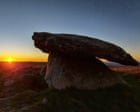
Unveiling the Enigma of Tregeseal Stone Circle: A Timeless Exploration
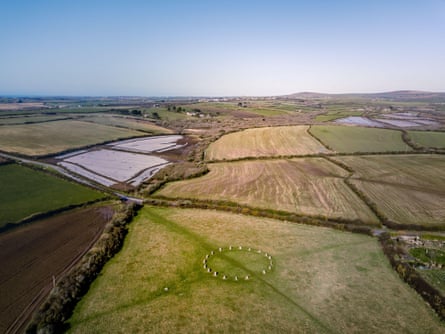
As dusk envelops the landscape, I stand amidst the ancient Tregeseal stone circle, nestled near St just. The granite stones rise majestically against the fading light, resembling ghostly figures gathered to witness our arrival. Above us,a tapestry of dried bracken and gorse ascends towards Carn Kenidjack—a striking rock formation that dominates the desolate skyline. Local folklore whispers of pixies and demons haunting this moorland, with tales suggesting that even the devil roams in search of lost souls.
A Ancient Insight: the Connection to Winter Solstice
Setting aside any supernatural apprehensions, we gaze toward the distant Isles of Scilly on the horizon. Suddenly, a break in the clouds allows golden rays to illuminate these islands—a breathtaking sight that my companion Carolyn Kennett, an archaeoastronomer, and I share in awe. This natural phenomenon may have been witnessed by those who erected this circle approximately 4,000 years ago.
Our gathering at Tregeseal revolves around discussions about winter solstice customs. Carolyn highlights how Cornwall’s ancient sites are intricately connected to celestial occurrences; she describes Land’s End peninsula as an age-old landscape crafted for observing midwinter sunsets.For example, from Chûn Quoit—a Neolithic burial chamber perched high on Morvah’s moors—one can observe the sun setting behind carn Kenidjack during winter solstice—an event likely intended by its original creators.
The Meaning of Scilly: A Gateway to Another Realm?
Carolyn suggests that Tregeseal was intentionally positioned for observers to catch midwinter sunsets over Scilly—an area regarded as liminal or otherworldly by its builders. “On clear days with high pressure,” she notes, “the isles appear strikingly close; on other days they seem to vanish.” This duality may have led them to associate Scilly with themes surrounding death and rebirth during winter solstice festivities.
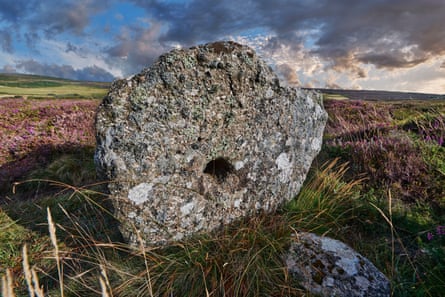
As we navigate through rust-hued moorland dotted with ancient burial mounds and remnants from mining activities toward a mysterious site—the only known row of holed stones in Britain—we contemplate their purpose. unlike Mên-an-tol nearby where one can crawl through its opening, these holes are too small for anything but a hand and sit low against the earth’s surface—leaving archaeologists perplexed about their function.
A Timekeeping Device: The Role of Light During Solstice Events
Carolyn theorizes that this arrangement might have acted as a countdown calendar for winter solstice events; sunlight would filter through these openings from late October until December creating dynamic light patterns across their surfaces. “Feeling warmth from those golden rays amidst cold darkness provided me profound insight into how our ancestors might have celebrated this time,” she reflects.
Cultural Links Between Ancient Traditions and Modern Celebrations
The alignment of numerous prehistoric structures with solar events during both midwinter and midsummer indicates intentional design rather than mere coincidence; early agrarians relied heavily on sunlight for sustenance throughout seasons marked by darkness or growth cycles.
This year’s darkest day approaches—the winter solstice—and it remains significant today when many seek comfort amid seasonal gloom while looking forward to longer daylight hours ahead.
No better location exists than Land’s End (West Penwith) peninsula which directly faces where sunset occurs each year during shortest days!
A biting easterly wind sweeps across me while eerie sounds echo from unseen livestock as I traverse soggy clover en route toward Boscawen-Ros stone—standing sentinel above southern coastlines since antiquity! It joins countless other prehistoric stones scattered throughout West penwith including famed Merry Maidens who were transformed into rock formations after defying Sabbath laws long ago! Reflecting upon centuries past evokes thoughts about what once floated upon Celtic Sea waters now replaced instead by modern vessels traversing routes once traveled solely via coracles!
Culminating Festivities at Midwinter Celebrations Across West Penwith
<
This December 21st presents another chance for communities across West Penwith region coming together celebrating midwinter traditions—from walking paths leading towards sacred circles & wells up hillsides adorned with historical beacons illuminating night skies above.
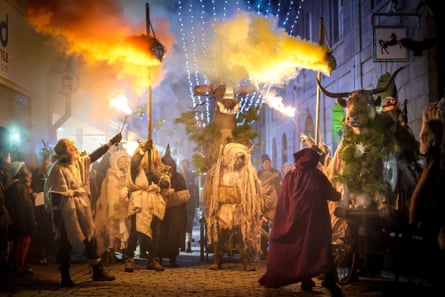
carolyn Kennett will guide participants along Chûn quoit observing sunset views beyond Carn Kenidjack while filmmaker Christopher Morris embarks upon his annual pilgrimage visiting Boscawen-Ros reflecting deeply before joining thousands gathering later Penzance town center participating Montol festivities reviving age-old Cornish customs featuring guise dancing accompanied lively music played using pipes drums fiddles!
Morris describes Montol eventful evening filled mischief encouraging revelers partake playful antics breaking taboos surrounding societal norms! Participants ignite sun-shaped effigies made papier-mâché dancing joyfully around flames alongside costumed figures embodying animals foliage heads veils representing nature itself—all culminating grand finale parading Mock Yule log down Chapel Street torchlight guiding way back sea shores marking end party welcoming return brighter days ahead!
an Enduring Legacy Rooted In Folklore And Community Spirit
< p>In enchanting landscapes found within West Penwith where folklore intertwines seamlessly storytelling rituals remain vibrant alive especially now amidst approaching midwinters’ embrace reminding us all hope renewal awaits just beyond darkest nights ahead…