“London fashion has leant too much into being theatrical. Drama is great, but style is a huge piece of why we buy fashion,” said Mario Arena, the creative director of Joseph, at its first catwalk show in eight years.
Arena has a subversive idea to re-energise London fashion week. More polish, less pantomime: clothes that sell, rather than clothes that scream.
“Buyers will say they come to London for innovation, and they go to Italy and France for style. But London used to be a style capital, and it should be again,” Arena said on Friday. He is the Australian-born creative director of the brand founded by the late Joseph Ettedgui, which was beloved in the 1980s and 1990s for flattering black trousers, chic leather and knit, and the see-and-be-seen in-store restaurant, Joe’s Cafe. “Women want clothes that work what we call the three Ds: desk, dinner, walking the dog when they get home,” he added.
“Totally agree,” said Laura Weir, the chief executive of the British Fashion Council. “London fashion week has been at its best when it has that wickedly potent combination of the creative but also the commercial; think of BodyMap and Jasper Conran, in the 1980s.”
Burberry, which shows at the old Billingsgate fish market on Monday evening, is already making the case for real clothes on the London catwalk, hitting its stride with a pivot away from edgy streetwear and toward classic outerwear.
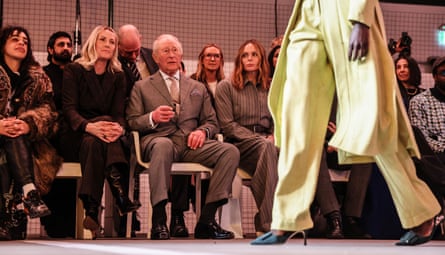
There is drama to be found off the catwalk. On Thursday morning, the last-minute appearance of a single armchair with a silk cushion among the wooden benches announced a surprise visit by King Charles. British-Nigerian designer Tolu Coker’s audience, which included fellow designer Stella McCartney and rappers Skepta and Little Simz, were asked to stand for the entrance of the monarch, who appeared to enjoy the distraction from news headlines about the arrest of his brother.
On a concrete catwalk deep within Tate Modern on Friday, Joseph’s signature minimal chic was updated with new fabric technology. A glazed leather jacket was laser cut to create a snakeskin effect, which “will look better the more you wear it, because as it softens the little scales will start to lift”, Arena said. YouTube clips of Ungaro, Saint Laurent and Dior shows from the 1970s and 1980s inspired faux-fur coats spliced with horizontal leather bands, to mimic traditional furs constructed from pelts. “I wanted that luxury look, but without killing anything cute and fluffy.”
The industry mood is about reality checks, not fantasy frocks. Financial pressures have seen names dropping off the schedule of fashion weeks in London, New York and Paris. Weir said: “I had one designer email me just the other day because their sponsor had pulled out and they couldn’t afford to show.” With the cost of even a small-scale show running at about £50,000, “not putting on a show is sometimes the right decision. If it’s going to put you into loads of debt, don’t do a show. There are other ways to reach people.”
Roksanda Ilinčić celebrated her brand’s 20th birthday with a catwalk show in a grand hotel ballroom six months ago, but is sitting out this season after deciding to channel resources into a three-floor pop-up store in Knightsbridge. “Financially and logistically, we couldn’t do both the shop and a show, and we chose the shop,” said Ilinčić, who closed a Mayfair boutique after the pandemic but said she hoped to open another permanent store soon.
This season, publicity for her latest collection will come via dinner at Claridges hotel, where actor and artist “friends of the house” will be dressed in the latest Roksanda. Skipping the catwalk had nudged her away from showstoppers and toward easier pieces, Ilinčić said. “Customers have been asking for that for a while, but if I’m doing a show I feel like I need the drama of the bigger pieces. Not showing has allowed me to explore a more wearable direction.”
London fashion week has a full diary, on and off the catwalk. Mulberry, the heritage British leather goods company, will celebrate 55 years of its Bayswater handbag with the release of 55 unique bags in never-seen-before fabric combinations, such as pony-printed calf with neon leather trim, using deadstock fabric. Han Chong, the designer behind the successful Self-Portrait label, is staging a film screening and dumplings-and-karaoke party instead of a show.
“It is always a fight for this industry to get heard,” said Weir, “but there is increasing appetite for fashion in media coverage over the past year. It is my view that in a world as volatile as this, with so many challenges to our values and humanity, there is even more of a need to platform creativity, making and British success stories.”